
What Is Tap Trading? How Tap-to-Trade Games Work
Understand what a tap does, how scoring differs from market profit, and what cash or funded-account prizes mean.
By Size team
Tap trading describes an interface where you place or manage a trading decision by tapping the screen. A tap-to-trade interface can appear in different products: a simulated trading game, a practice tool or a product involving real financial exposure. The control style alone does not tell you what you can win or lose.
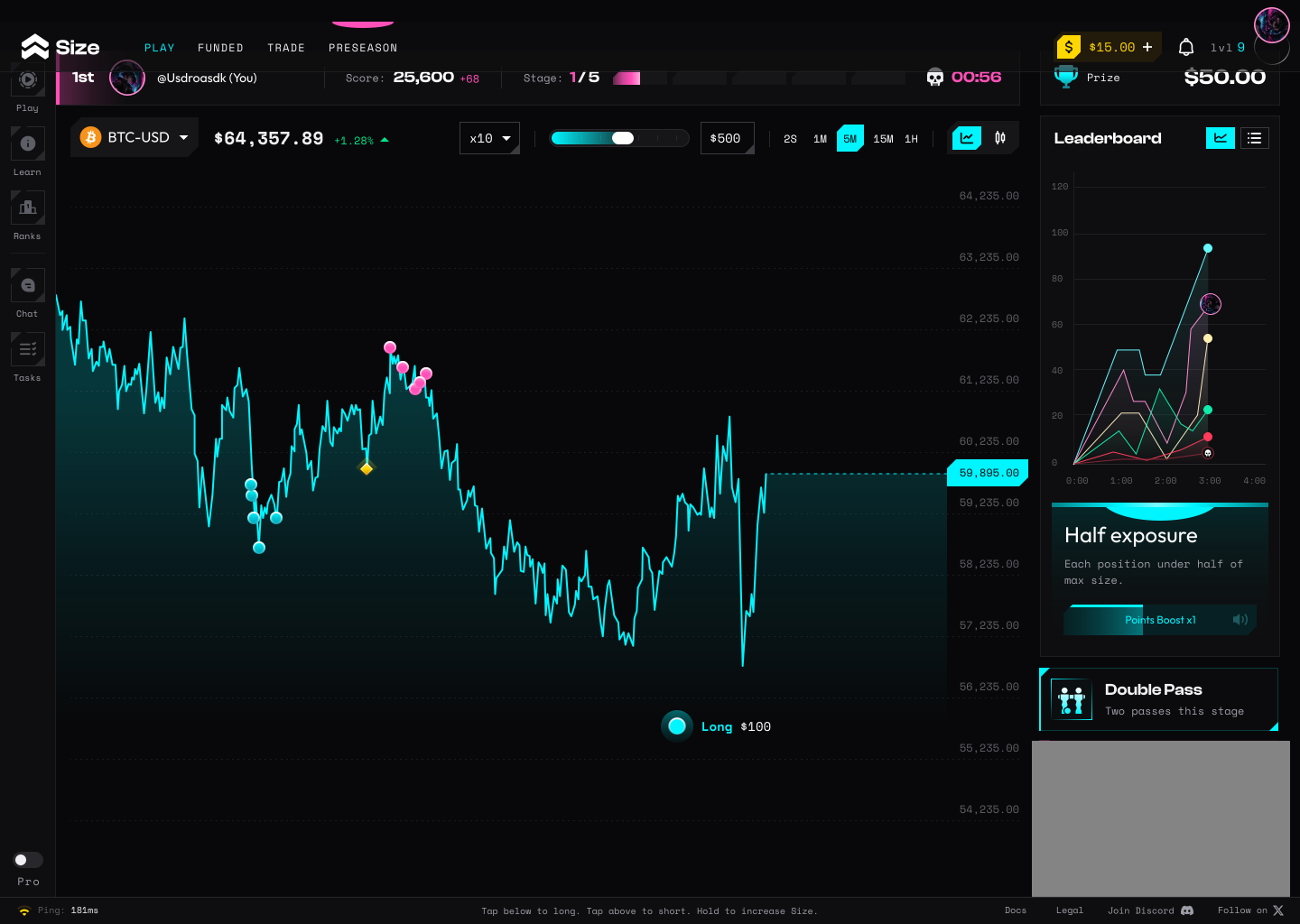
In Size, tap trading is part of a trading survival game. You make virtual market decisions, build a score and compete against skill-rated bots. Practice is free with no prize. Paid challenges offer a selected cash prize or simulated funded account, and the entry can be lost.
How do tap trading games work?
A tap trading game combines a simple input with a set of game rules. Check what each tap does: it might place a virtual position, change exposure or interact with an existing position. Other products can use different controls and objectives, so do not infer mechanics from the label.
For Size, read the selected market and position controls, follow the current boost objective and watch your score and rank as the stage timer runs down. Trading performance contributes to the result, but the game’s scoring and winning rules determine the award.
Crypto tap trading and market prices
A crypto tap trading game can reference a crypto market while using a virtual balance. Check the selected market’s label: Size’s live-price markets follow real prices, while simulated-price markets use a simulated path. Positions and the trading balance in the game remain virtual.
A familiar chart does not mean you own crypto or opened an exchange position. Likewise, instruments available on a Size funded account are not a promise that every game offers those same markets. Read the opponents and markets guide.
What affects the score after a tap?
Trading profits and losses affect Size’s score. Active boosts and rewards can also contribute according to their conditions. A rising virtual balance, high current score and final winning result are different observations. Watch the score and stage objectives rather than assuming every profitable position guarantees survival.
The standard Size format has timed elimination stages. The lowest-ranked active competitor is removed at each stage end, and the final result is confirmed on the results screen. Read how game scoring works and boosts and rewards for the details.
Can tap trading games award cash prizes?
Some games have prize rules; the tap interface itself establishes no reward. In Size, choose cash or a simulated funded account before a paid challenge. It is the same survival game with a different prize. To win under the standard format, finish first with a positive final score and meet the selected winning conditions.
A cash prize is separate from virtual trading profit. Winning a funded account begins another stage with its own risk and payout rules. The simulated starting capital cannot be withdrawn. Compare cash challenges and funded-account challenges before choosing.
Tap trading vs paper trading and perps
These labels answer different questions. Tap trading describes an input style. Paper trading describes simulated trading. Perpetual futures describe a contract type. A game can use a tap interface and simulated balances without reproducing an exchange’s costs, funding or liquidation engine.
For a fuller comparison, read trading games vs paper trading and perpetual futures explained. A successful practice session does not prove future live-trading performance.
Try the controls in free practice
Start with Size’s free practice. Learn what your inputs do, how positions and boosts affect the score, and how the result is shown. Practice awards no cash or funded account.
Before paid play, review the selected entry, markets, difficulty, prize and winning rules. Fast controls make an action simple to enter; they do not make the outcome certain.